
Of course the important times of our life — births, marriages, deaths — were times of religious observance and celebrated within families and among communities with feasts. “Thrift, thrift, Horatio.” Declares Hamlet. “The funeral baked meats did coldly furnish forth the marriage tables.”
WINTER SOLTICE / YULE
- Cakes with honey were offered to Thor as peace offerings –> became Yule-cakes. Yule-cake were sliced, toasted, and dipped in ale (and some kept until the new year). Many traditional Yule-cakes (the Shrewsbury cake for example) are something akin to modern cookies and are, therefore, the forerunner of all Christmas cookies
- Plum ‘squash’ (mashed juices of plums) came from Germany and Denmark and was mixed with grains to ensure a good harvest; many boiled it in a bag –> Plumb Pudding of England (also dipped in liquor and lit)
- Goose meat was baked into ‘pyes’ and given to less well-off neighbors
- The ancient ceremonial dish served at Christmas feast was boar’s head, roasted or boiled. The boar’s head carol was sung at Queens College Oxford [Hackwood, Good Cheer, p198]
- ‘frumenty’ was part of the Christmas meal: ‘and lastly, who would but praise it, because of Christmas, when good cheer doth so abound, as if all the world were made of minced pies, plum-pudding, and furmety.’1676
TWELFTH DAY/NIGHT
- Yule cakes made with a bean baked inside –> one becomes ‘King of the Bean’ and lord of the revels. Some people incensed the Cake to protect against witchcraft and sickness in the coming year.
SHROVE TUESDAY
COLLOP MONDAY
- meat was used up before the start of lent on Ash Wednesday. More often it was bacon that was served.
MICHAELMASS and MARTINMASS (11Nov)
- traditional to serve a roast goose, young stubble-fed rather than the fatted Christmas goose (distinct flavor difference)
- Martinmass is the time of the great slaughter, when farm animals are processed, so it was traditional to serve up the fresh ‘meat-puddings’ made from blood, groats, and suet. in Germany the day was known as the Feast of the Sausages.
- Martinmass is also the time when the newly produced wines were tasted for the first time. This is still a major celebration time in France for the Beaujolais nouveau .
EASTER
- Eastre was the pagan Saxon goddess of the East whose festival was celebrated in Spring
- bitter-sweet tansey cakes served as commemorate the bitter herbs used at Jewish Passover
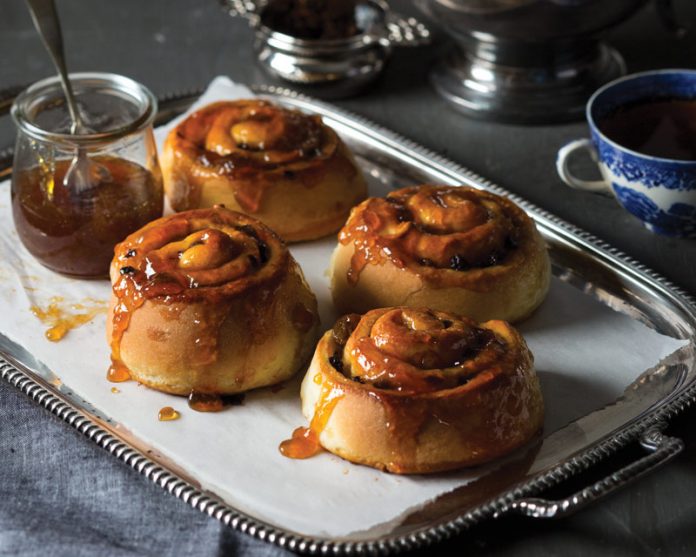
- hot crossed buns served on Good Friday / cakes were marked to prevent devilish interference on a day known for bad luck. Chelsea buns, the fore-runner of modern cinnamon buns, probably began as Good Friday specials.
SHEARER’S FEAST
- a mid-summer pastoral festival that began when the last sheep was shorne
IN-GATHERING / HARVEST SUPPER / KERN SUPPER
- a celebration sponsored by the farm owner when the last of the corn had been brought in
- an effigy made of sheaves (the ‘Kern Baby’) was dressed up processed to the church in fulfillment of Levitical law. In Roman times this probably represented the goddess Ceres
LAMMAS – 1 August
- ‘Loaf-mass’, or Lammas, celebrated the first fruits of the earth generally, the grain harvest more particularly
- the ‘Bean Feast’ or ‘Wayzgoose’ celebrated the agricultural workers who helped process foods and prefigures our own Labor Day and was named for the beans that become ripe at such time
 European History
You must be logged in to post a comment.