
If we prefer history to propaganda, we must stress what mattered to contemporaries. Since this often goes counter to the orthodox legends, it is likely to be stigmatised as heresy, though it is still true that if a scientific man has not learned to be heretical, he has learned nothing. In other words, the very basis of history, like that of science, is always scepticism and never acceptance.
G.O.Sayles
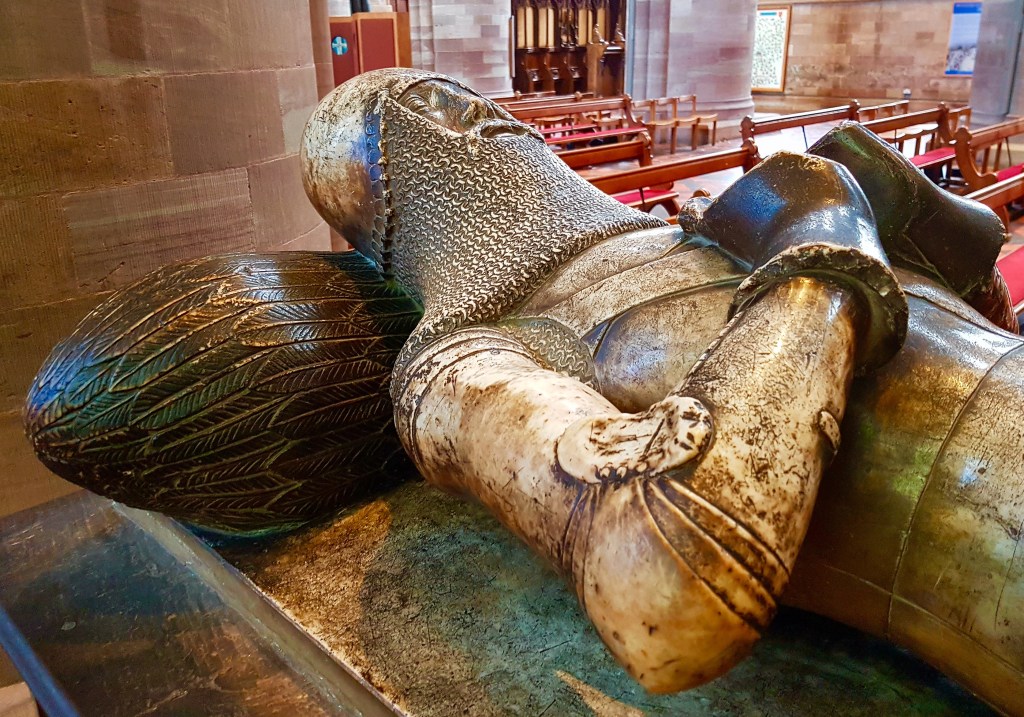
Edward I of England was many years ago reported to have faithfully observed his motto ‘pactum serva’, that is, ‘keep your obligations’. However, a reader of the records from the late 13th century will discover that to many of Edward’s contemporaries he seemed both in youth and old age a double-crosser, a lair, and a cheat. And still today one historian will assert that Edward’s motto was to ‘keep troth’, another makes him apply it in practice, and yet another depicts the king as proud to possess such a motto. And yet there is no contemporary evidence for this motto (let alone that it was adopted by King Edward). The words ‘pactum serva’ were carved upon Edward’s tomb in Westminster Abbey two hundred and fifty years after his death — the king and the motto had nothing to do with one another.
Sayles points out that in their zeal for establishing the continuity of parliamentary functions — especially popular representation, legislation, and taxation — past historians misapprehended what Medieval parliaments really did. They rushed to conclusions that when studying parliament prior to the 16th and 17th centuries, they were dealing with representative legislative assemblies. The formidable scholar William Stubbs, for example, committed fatal errors in his Constitutional History by seeing what he wanted to see rather than let the documents speak in their own language. Stubb’s preoccupation with finding the origin of democratic institutions in pre-Conquest England caused him to distort the essence of Medieval institutions of a king’s court. “By his training,” writes Sayles, “Stubbs had a reverence for facts, but his inferences were not decided by the facts but by his inherited assumptions which arranged the facts in the traditional mould. He committed the common fault, so frequently seen in historical documentaries on television, of reading history backwards and, instead of drawing his conclusions from the evidence, he imposed his conclusions on the evidence. It was inevitable that time and time again he was aware that many of the facts would not square with his assumptions and, because he was an honest worker, he recorded them. This is why it is often ingenuously thought that the ‘perfect hedger’ anticipated the arguments that were to flout his own. But it is surely naive to continue to regard this as an indication of impartiality, for if impartiality means anything, it must mean that all the facts have been considered and carefully weighed and given an opportunity to influence the judgement.”
Sayles continues:
“However much the traditional story has been questioned in this field or that, the questioning has not seriously disturbed historians who believe that, by patching here and there, they can still produce a garment suited to modern needs. It may well be that myths have to be invented in order to explain, colour, and justify political and social change and, by so doing, provide a vision of the future rather than a view of the past. As a reflection of public opinion they must, of course, be studied, but in their own right and not as portraying historical fact.”
In history we must make sure that, if the evidence does not square with our hypothesis, we discard the hypothesis and do not prefer instead to explain away the facts. As T.H.Huxley put it long ago, it is always sad to slay a beautiful hypothesis with hard facts, but it is preferable to sitting like hens on hard-boiled eggs.
 European History
You must be logged in to post a comment.